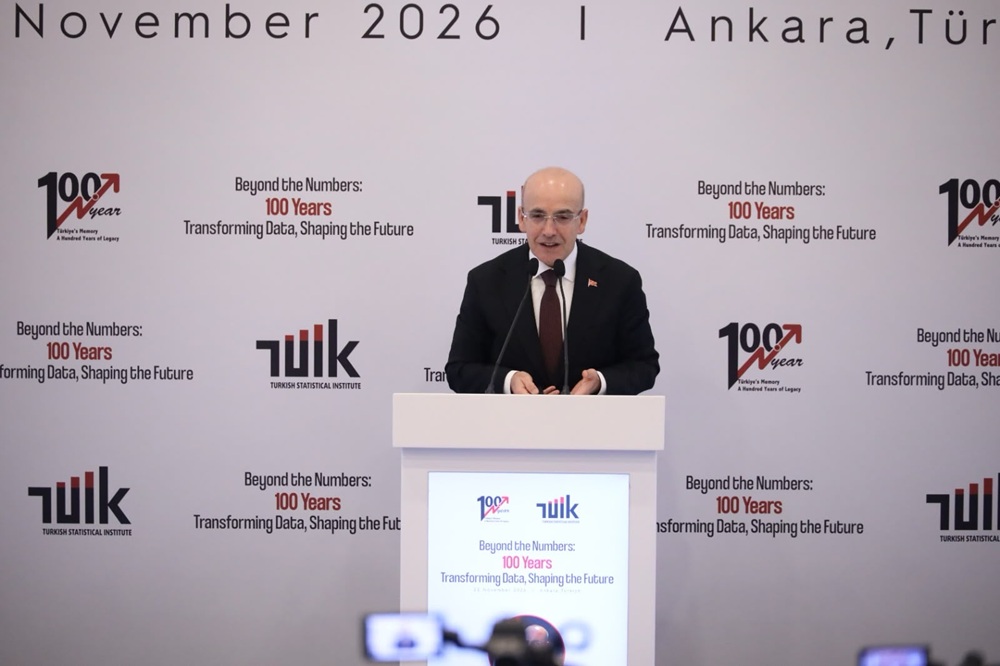
 The Turkish Statistical Institute (TurkStat) convened the High-Level Conference on Official Statistics, under the theme “Beyond the Numbers: 100 Years – Transforming Data, Shaping the Future”, on 23 November 2026 at its headquarters in Ankara, Türkiye, marking its centenary. The conference brought together high-level representatives of international organisations, heads of national statistical offices, senior officials, and experts to exchange perspectives on the transformation of official statistics and the future of statistical systems. The opening session was honoured by the presence of H.E. Mehmet ŞİMŞEK, Minister of Treasury and Finance of the Republic of Türkiye, who delivered the opening remarks.
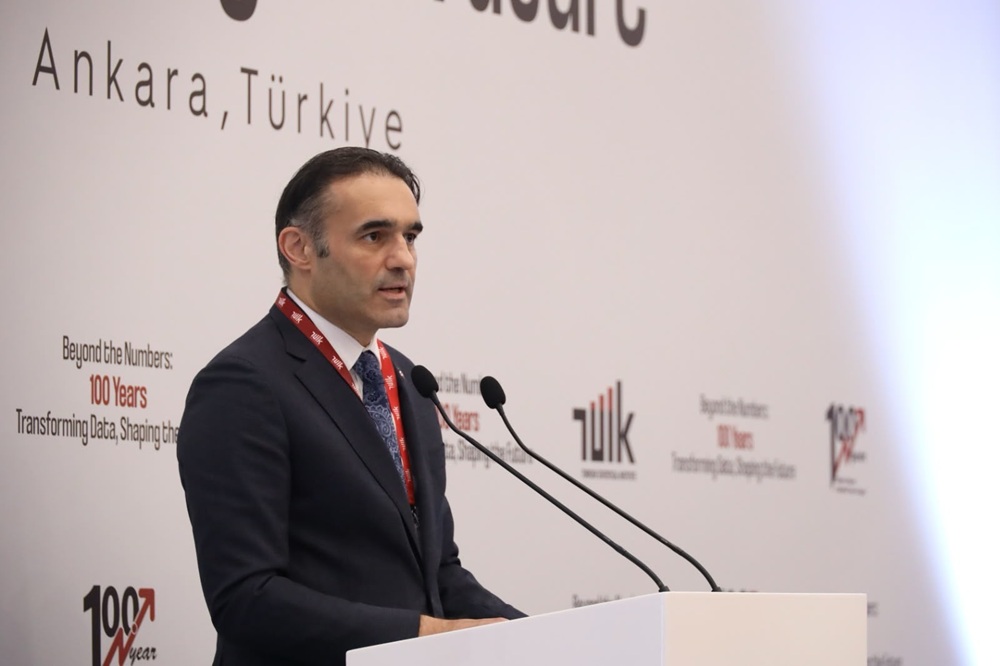
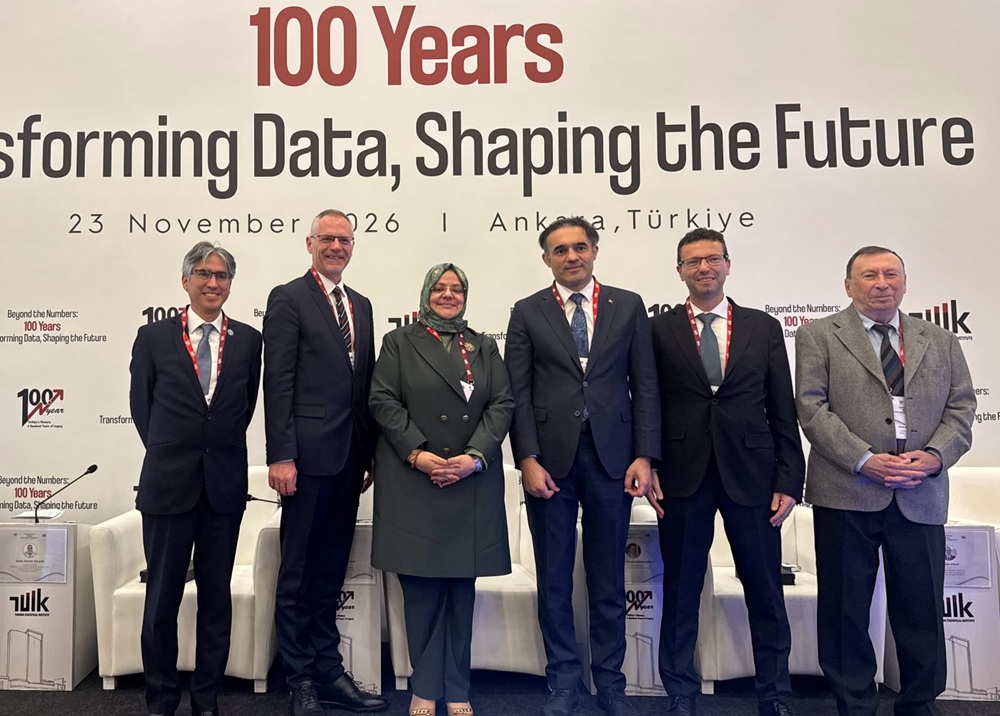
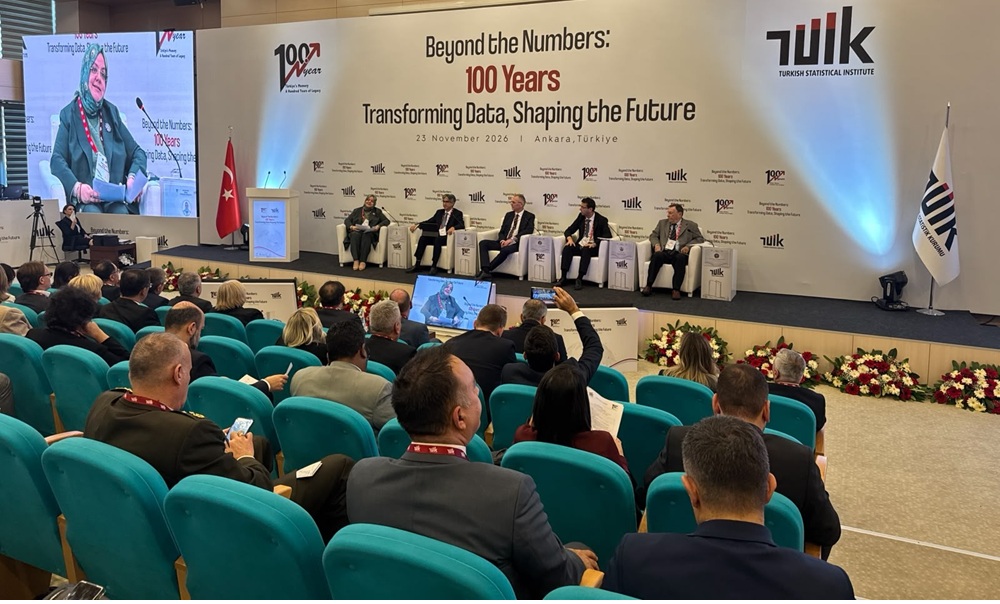
As part of the conference programme, H.E. Zehra Zümrüt SELÇUK, moderated a high-level panel entitled “Transformation in Population and Agricultural Statistics: Censuses, Administrative Registers, and the Future of Official Statistics”. H.E. SELÇUK congratulated Mr. Mehmet ARABACI, President of TurkStat and the dedicated staff of TurkStat on the occasion of their centenary, recognising a century of institutional achievement and valuable contributions to the advancement of official statistics in Türkiye and international statistical cooperation.
The panel brought together four distinguished experts: Dr. José ROSERO MONCAYO, Chief Statistician and Director of the Statistics Division of the Food and Agriculture Organization of the United Nations (FAO); Prof. Dr. Haluk KASNAKOĞLU, Professor (Retired) at Middle East Technical University (METU) and former Director of the FAO Statistics Division; Mr. Andres VIKAT, Chief of the Social and Demographic Statistics Section at the United Nations Economic Commission for Europe (UNECE); and Mr. José Domingo MARTÍNEZ SOLANO, Deputy Head of the Population and Migration Unit at Eurostat.
Before the panel discussion, TurkStat experts have delivered two presentations on the experience and expertise of the Institute concerning the population and agricultural censuses reflecting the national context and perspectives to enrich the discussion. The panel focused further on the transition from traditional census methods towards register-based and hybrid approaches, the integration of administrative registers with surveys and geospatial data, and the opportunities and challenges arising from digital transformation and innovative data sources. Particular attention was given to maintaining data quality, coverage, international comparability, and public trust while modernising statistical production systems. The panellists also exchanged views on the different approaches adopted by countries and statistical institutions towards census modernisation and the importance of integrating population and agricultural statistics into coherent statistical systems that respond to evolving policy needs.
Highlighting the relevance of these developments for the 57 OIC Member Countries, H.E. SELÇUK underlined the importance of strengthening national statistical capacities and facilitating the exchange of experiences and good practices. She also referred to the ongoing cooperation between SESRIC and TurkStat, including their joint collaboration on strengthening agricultural census systems in OIC Member Countries as a continuation of the side event organised on the side-lines of the UN StatCom in March 2026. She has further underlined that the 15th Session of the OIC Statistical Commission, convened in Jeddah on 29–30 September 2026, hosted a thematic session on modernising population and housing statistics through digital and interoperable data systems. The Commission further issued a resolution item encouraging OIC Member Countries to apply internationally agreed frameworks and standards particularly the Principles and Recommendations for Population and Housing Censuses (Revision 4), and inviting further for regional and international collaboration.
Through its Statistical Capacity Building (StatCaB) Programme, SESRIC continues to support OIC Member Countries in strengthening their agricultural statistics and population and housing census systems. The Centre remains committed to facilitating technical cooperation, peer learning, and knowledge-sharing initiatives among OIC Member Countries in collaboration with national, regional, and international partners, particularly in preparation for the 2030 census round.
Photos